Custom design solutions available for bespoke needs. Learn More
My Cart:
Across mental health, corrections, and healthcare procurement, it’s become common to see furniture tenders lead with a single number: how much does it weigh? Heavier gets read as safer. Safer gets read as heavier.
We understand why. A kilogram figure is easy to specify, easy to compare across suppliers, and it feels reassuringly objective.
It’s also, we’d argue, the wrong number.
The question weight doesn’t answer
The question that actually matters in a high-risk environment isn’t “how much does this weigh?” It’s “what happens to the person in the room, and the staff around them, in the worst thirty seconds this piece of furniture will ever see?”
Weight-based safety strategies are built on an assumption: that the person attempting to move the furniture is behaving physically the way they would on an ordinary day. In a genuine crisis, that assumption doesn’t hold.
When someone moves into acute distress, whether that’s fear, panic, or a mental health crisis, the body’s stress response releases a surge of adrenaline. This isn’t folklore; it’s well-documented physiology: blood is redirected to major muscle groups, glucose and oxygen availability increases, and short-term muscular power output rises measurably above resting capacity. At the same time, the stress response suppresses pain signalling, dulling the natural feedback that would normally stop someone over-exerting.
In practical terms, a weighted chair is being asked to hold against exactly the person whose physical capability is, in that moment, least predictable. A weight threshold calculated against calm-state strength is least reliable in precisely the moment it’s meant to matter most.
The paradox nobody prices in
Here’s the part we think gets missed in procurement conversations: weight is not a one-way safety dial.
If a weight-based strategy succeeds, the furniture stays put and nothing happens. But if it fails, the same mass that was meant to prevent harm now increases the force and severity of it. A heavier object thrown or swung causes materially more damage than a lighter one would have. There’s no middle outcome, and the downside case is rarely priced into the decision.
There’s a quieter cost too. Furniture that relies on mass for safety still needs to be moved for cleaning, room changes, and reconfiguration. Every one of those routine tasks becomes a manual handling risk for staff, not just an occasional risk in a crisis.
It’s worth noting that even manufacturers who lean heavily on mass as a safety mechanism typically still supply floor-fixing kits and anti-concealment base plates alongside it. That’s a tacit admission that weight alone isn’t considered sufficient, even by the products built around it.
Why we build the way we do
This is why Abecca doesn’t chase a weight number, and why we’re not going to start.
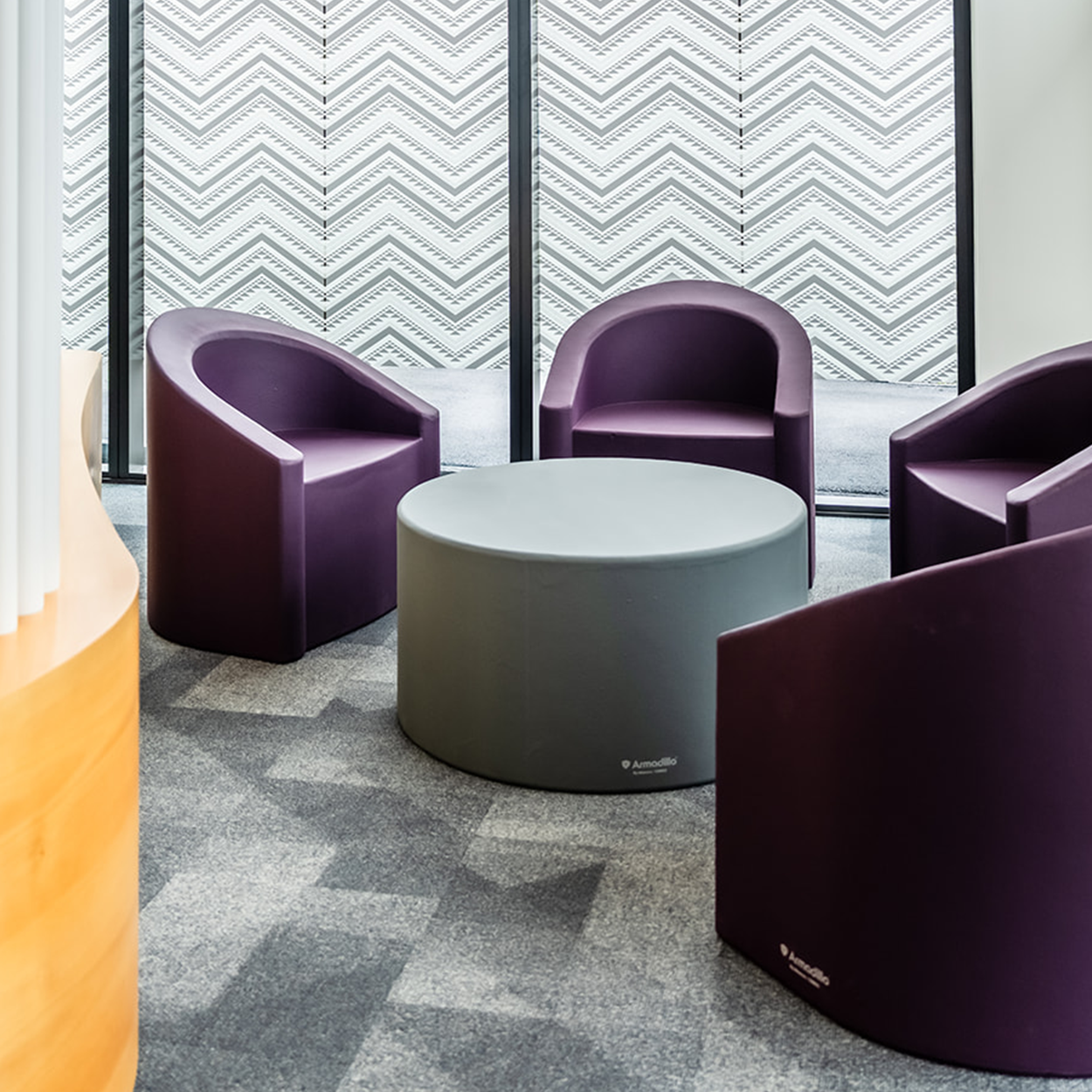
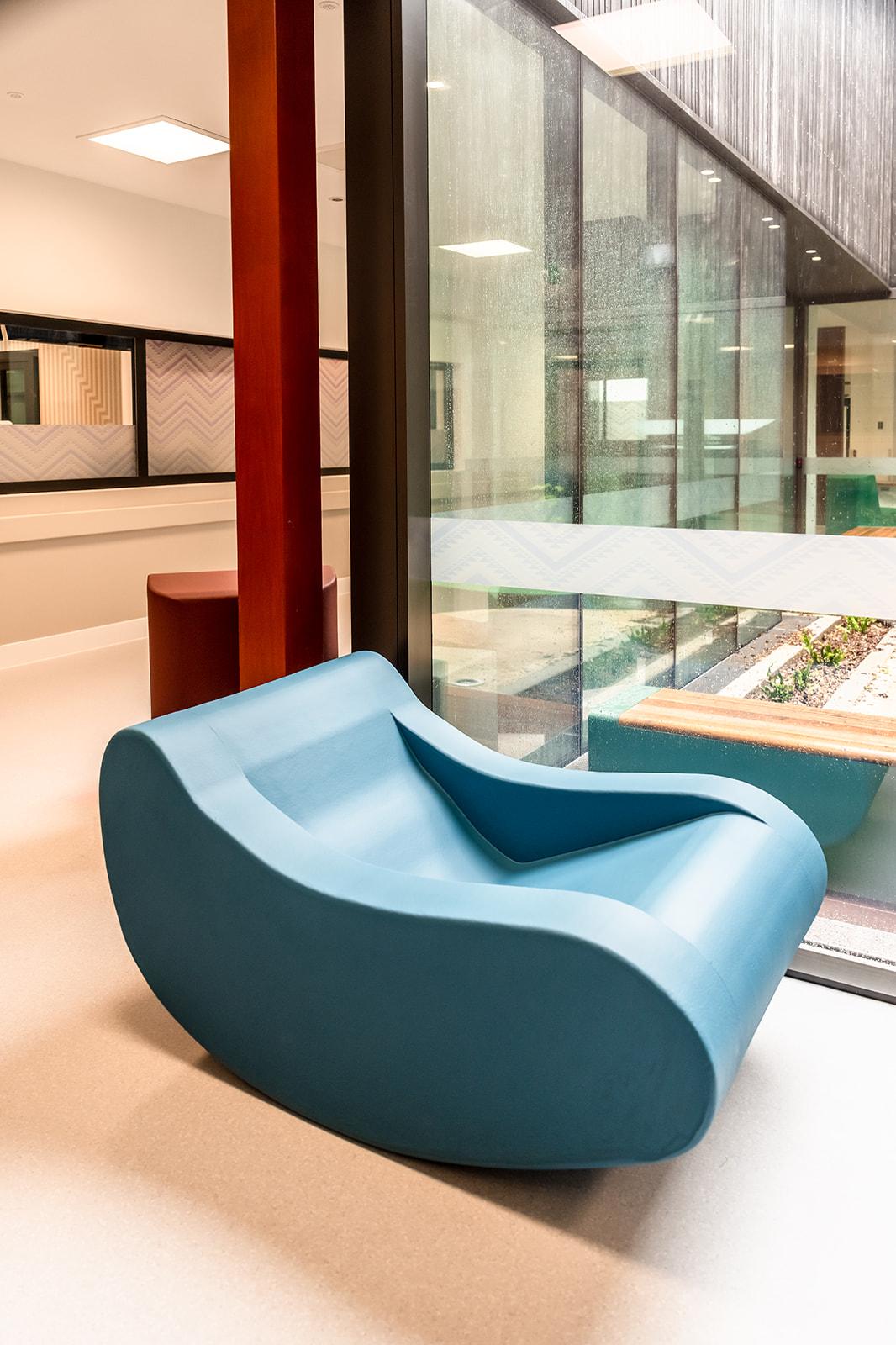
Our Armadillo® Eagle and Hawk ranges are solid foam with no internal metal or timber frame. That construction naturally carries real weight, and we’re upfront about that. But we don’t engineer for maximum mass as the primary safety mechanism, and we don’t ask a facility to rely on it as one.
Instead, the safety case sits in the construction itself: no rigid internal components to break free or expose, surfaces that remove ligature and concealment points at the source, and rounded forms with no sharp edges or protrusions. If the furniture is ever moved, the harm it can cause is already limited by design, rather than being entirely dependent on it never moving at all.
It’s also why our language is deliberate. We describe Armadillo® as Easy to Reposition, not lightweight, and not unliftable. Design first. Everything else, including mass, is a secondary characteristic, not the headline claim.
The standard that doesn’t exist yet
Weight thresholds haven’t become the industry default because they’re the best available measure. They’ve become the default because, for furniture-specific misuse and weaponisation risk, there isn’t a proper measure at all.
Fire performance is well covered by standards like BS 5852 and BS 7177. Ligature risk has guidance too, from sources like the NHS’s Health Building Notes and the Australasian Health Facilities Guidelines, both of which are clear that ligature risk sits on a spectrum rather than a binary pass or fail. What’s missing is the equivalent for furniture as a potential weapon: a consistent, testable methodology covering seam integrity, edge and fracture behaviour, ligature-point elimination, and controlled mass and leverage, rather than a single kilogram figure asked to stand in for all of it.
We think the sector deserves a standard as considered as the ones that already exist for fire safety. We’d rather help build it than keep working around its absence, and we’re open to that conversation with any facility, specifier, or industry body who shares the concern.
Questions worth asking instead
If you’re writing or evaluating a tender for high-risk furniture, here’s where we’d suggest starting, instead of or alongside a weight threshold:
None of these require a new standard to exist first. They just shift the conversation from a single number to the things that actually determine what happens in the room.
Not the only option. Just the best one.
Want to talk through what this means for a current tender or specification? Get in touch with our team.
Share this Article