Custom design solutions available for bespoke needs. Learn More
My Cart:
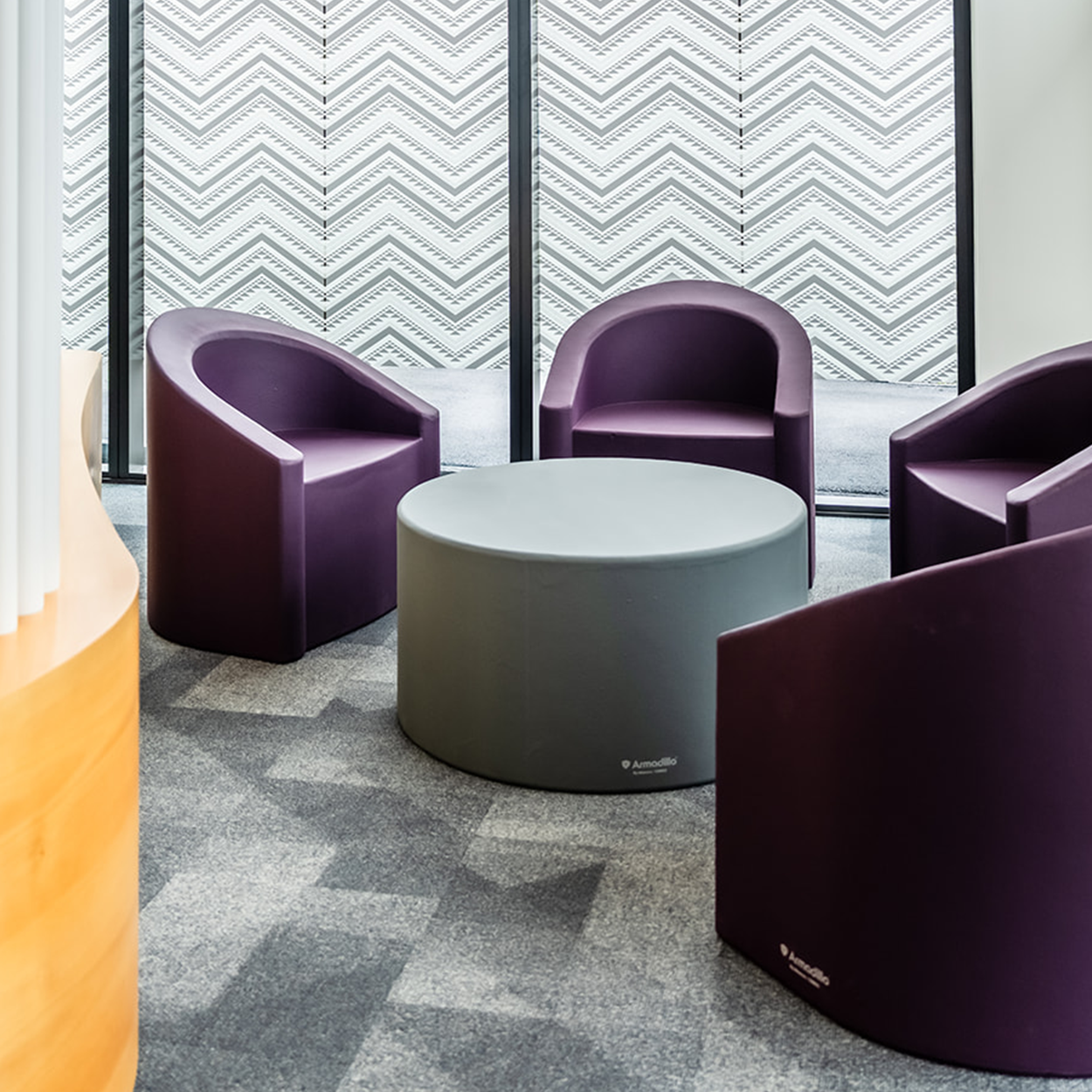
There is a concept in mental health care that deserves more attention than it typically gets outside clinical circles.
It is called milieu therapy. And once you understand it, it is very difficult to think about institutional furniture the same way again.
Milieu therapy is a structured approach to inpatient and residential care that treats the entire social, physical, and cultural environment as a therapeutic tool. Rather than locating treatment solely in one-on-one clinical interactions, it recognises that everything around a person, the space they move through, the objects they interact with, the people they share it with is either contributing to their recovery or working against it.
The physical environment, in this framework, is not backdrop. It is an active participant in care.
Developed through the mid-twentieth century and now embedded in best-practice models across mental health, addiction, and behavioural care settings, milieu therapy has shaped how thoughtful facilities approach everything from ward layout to daily routine. The principle applies equally in aged care, where the physical environment profoundly affects dignity, orientation, and wellbeing, and in corrections settings, where the relationship between environment and behaviour is well documented.
The room is doing something. The question is whether it is doing what you need it to do.
Most people working in care environments know this instinctively. A harsh, clinical space heightens agitation. A room that feels considered, calm, and human tends to de-escalate. The furniture either reinforces that or it quietly adds to the noise.
Sensory design is what happens when that intuition becomes intentional.
It is the deliberate use of colour, form, texture, weight, and spatial arrangement to reduce sensory overload, support emotional regulation, and create a felt sense of safety. It draws directly on milieu therapy principles, translating them into the physical decisions that shape a space including, critically, the furniture.
Here is what that looks like in practice.
Colour regulates before it decorates
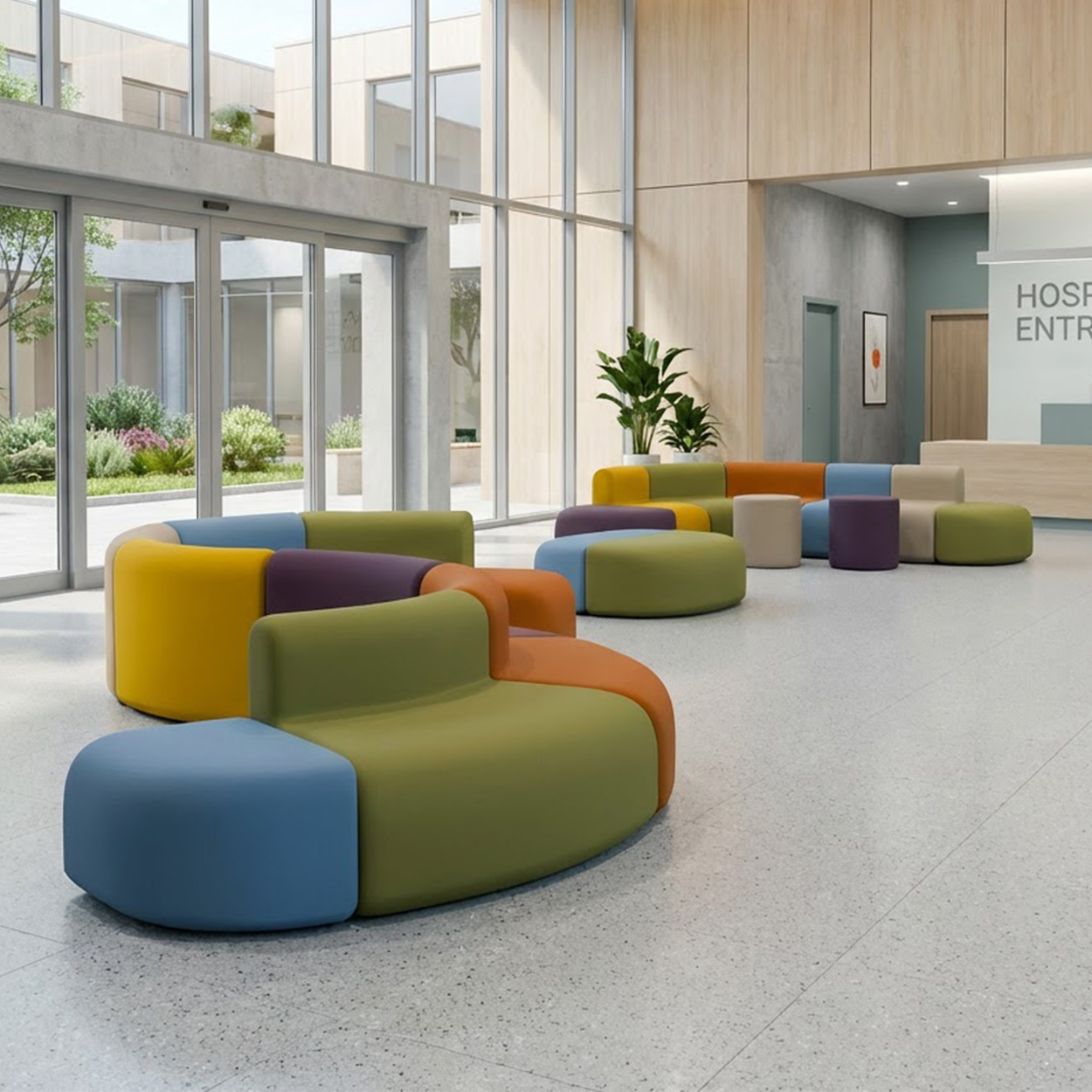
Colour affects mood and arousal before anyone consciously registers it. Muted, warm tones tend to calm. Cooler tones support focus. High contrast and saturated colours can heighten agitation in people who are already dysregulated. The palette of a seclusion room should be doing very different work from a group therapy space and in most environments, furniture carries more colour surface area than the walls.
Form communicates safety
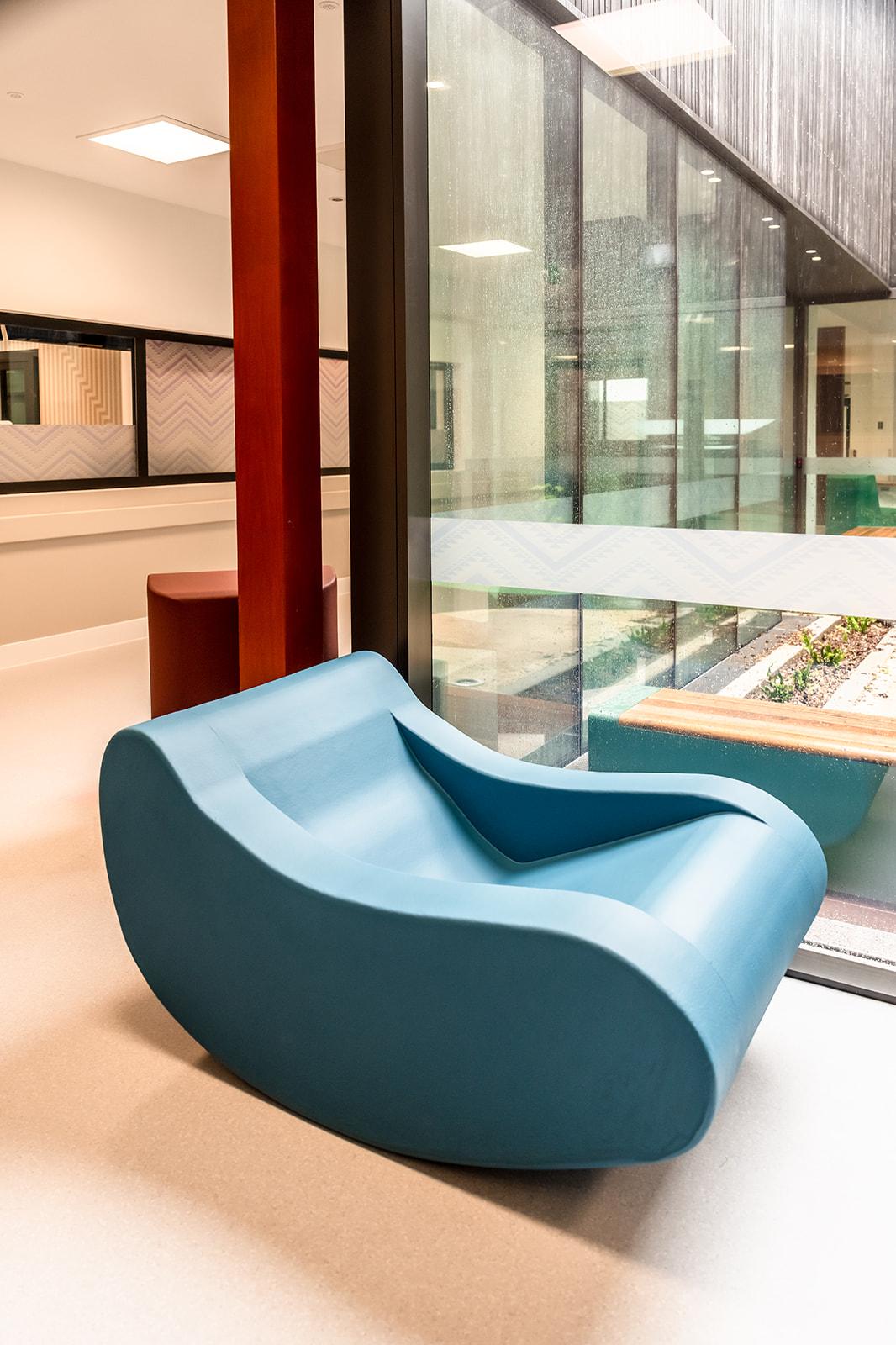
Rounded edges, continuous curves, and the absence of sharp protrusions send a quiet signal to the nervous system: this space will not hurt you. That signal is more significant than it sounds in environments where people are on high alert. Furniture with hard angles, exposed frames, or abrupt edges does the opposite it reads as threat-adjacent, even when it is not.
Solidity ground the space
Substantial, grounded objects contribute to a perception of stability and containment the opposite of the ambient unpredictability that drives agitation. Furniture that feels anchored, rather than light and easily displaced, supports that sense of groundedness in a way that has both psychological and practical dimensions.
Texture and surface quality affect regulation
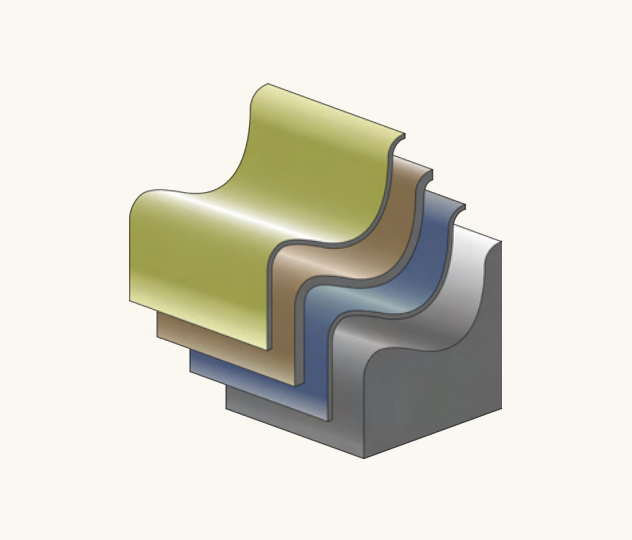
Seam-free, smooth, consistent surfaces reduce unnecessary sensory irritation. They also support the clinical requirements of the environment easy cleaning, infection control, no places for bacteria or ligature risk to accumulate. Harsh, cold, or inconsistent surface textures can heighten hypervigilance in people who are already dysregulated. The surface someone touches is part of the sensory environment.
Configuration shapes how people inhabit a space
How furniture is arranged affects how people move through and relate to a space. Flexible configuration supports different therapeutic purposes individual reflection, group work, staff observation without the space feeling unpredictable or purely clinical. Furniture that can be repositioned thoughtfully gives facilities the ability to shape the milieu for different needs across the day.
Furniture specified for secure care environments has traditionally been evaluated on a narrow brief: durability, infection control, fire compliance, ligature risk. Those criteria matter enormously. They are non-negotiable in the environments Abecca serves.
But they are a floor, not a ceiling.
Furniture that meets compliance requirements and contributes to the sensory environment that supports regulation, communicates safety through form, and fits within a coherent therapeutic milieu is doing more of the work it is there to do.
For the people in care, that difference is not abstract. A room that feels considered rather than institutional changes how people experience the time they spend in it. For staff, furniture designed with the full environment in mind reduces the ambient friction of working in a space that feels misaligned with its purpose.
Milieu therapy tells us the environment is the intervention. Sensory design tells us how to build it intentionally. The furniture is where both principles meet the floor.
We are not suggesting furniture alone transforms outcomes. Care is complex, and the physical environment is one factor among many.
But it is a factor. And it is one that every procurement decision either gets right or does not.
If you are specifying furniture for a mental health unit, an aged care facility, or a corrections environment, the questions worth asking go beyond dimensions and lead times. What is this furniture communicating to the people who use it? What is it doing to the sensory environment of the space? Does it belong in a milieu that is trying to help people or does it just belong in a room?
We would be glad to talk through what that looks like for your spaces.
Share this Article