Custom design solutions available for bespoke needs. Learn More
My Cart:
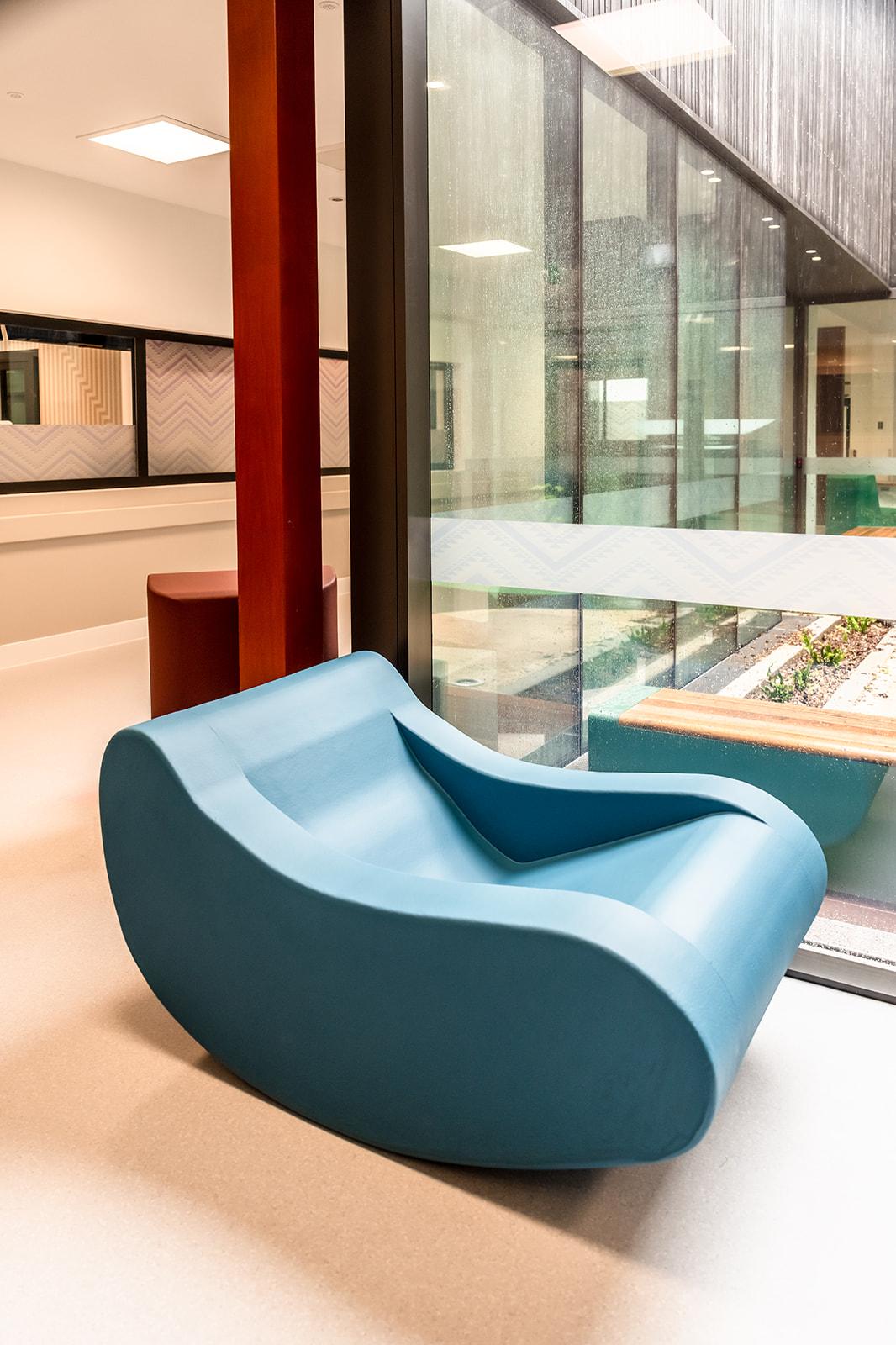
There’s a moment that happens in well-designed therapeutic spaces that’s easy to overlook. A young person walks in, takes in the room, and their shoulders drop. Not because someone told them to relax, but because the environment itself communicated something safe. Something that said: you’re not in trouble here.
That moment doesn’t happen by accident. It’s the result of deliberate choices, and furniture is a bigger part of that than most people realise.
For people experiencing mental health challenges, the nervous system is often already working overtime. Anxiety, trauma, psychosis, and mood disorders all affect how a person perceives and processes their surroundings. Loud colours can feel aggressive. Hard edges can feel threatening. Cold, clinical surfaces can reinforce a sense of institutional confinement rather than care.
For children and adolescents, this is amplified. Young people in mental health units or youth justice facilities are often in environments that feel nothing like home, and that unfamiliarity is itself a source of stress. The sensory environment, what they see, touch, hear, and how the space makes them feel physically, plays a direct role in whether they feel regulated or dysregulated.
This is where sensory-informed design becomes not just a nice-to-have, but a clinical consideration.
Conventional institutional furniture was designed around a different set of priorities: durability, cost, and ease of cleaning. The result is typically hard surfaces, metal frames, sharp corners, and materials that are cold to the touch and unforgiving underfoot.
In a general hospital ward or an office waiting room, that might be acceptable. In a mental health unit or a youth justice facility, it creates an environment that works against the very outcomes the facility is trying to achieve.
Hard furniture invites hard interactions. A chair that feels like a weapon is a chair that can become one. A surface that’s cold and unyielding communicates, at a sensory level, that this is not a space for comfort or recovery.
There’s also the ligature risk that comes with traditional construction. Metal frames, wooden joints, exposed fixings, and fabric edges all present attachment points that clinicians have to manage. Every ligature point is a risk, and managing that risk in a space full of hard, conventional furniture is an ongoing challenge for staff.
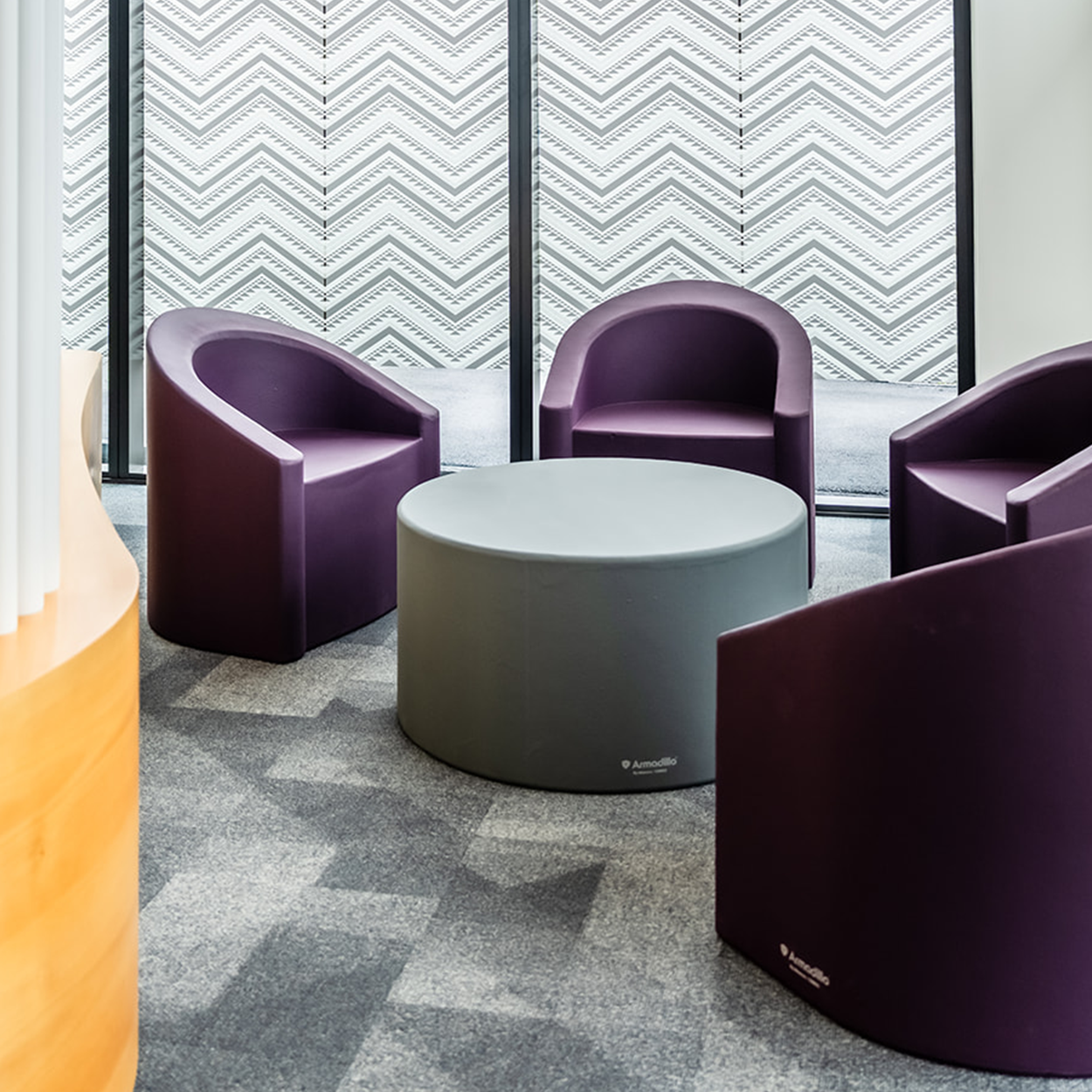
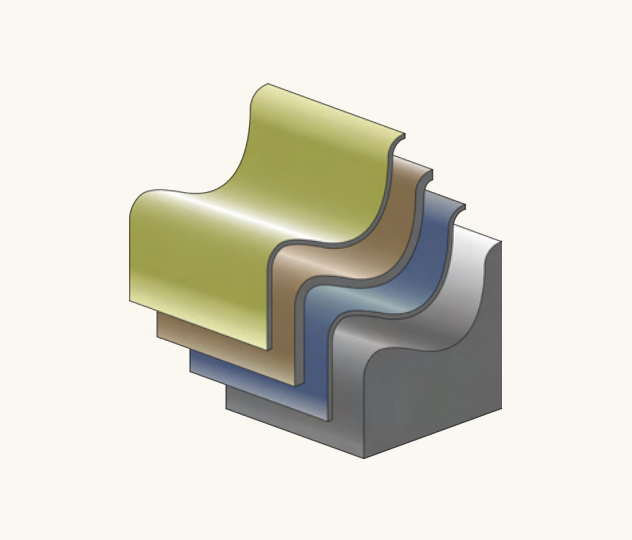
Sensory-safe furniture starts with the material. Solid foam construction, with no metal or wooden components, changes the entire character of a piece. It’s soft to the touch. It doesn’t have the cold, hard quality that triggers a stress response. It doesn’t clang or scrape when moved. It absorbs sound rather than reflecting it, which contributes to a quieter, calmer acoustic environment.
For children and adolescents especially, furniture that feels soft and rounded communicates safety at a primal level. Young people in distress are often in a state where rational processing is limited, and the body responds to environmental cues before the mind does. A room full of soft, warm, rounded furniture is a different physiological experience from a room full of hard edges and metal legs.
Colour also plays a role. Muted, warm tones are calming. Bright, saturated colours can be stimulating in ways that aren’t always helpful in a clinical context. The ability to specify colour, and to vary it by space or by the age group using the facility, is a meaningful clinical tool.
Surface texture matters too. A smooth, wipeable surface that still feels warm and tactile is very different from a hard plastic that feels institutional. When a young person is grounding themselves, using physical sensation to manage distress, the texture of what they’re sitting on or leaning against is part of that process.
Child and adolescent mental health units (CAMHUs) and youth justice facilities present specific design challenges. Young people in these environments are developmentally different from adults, and their relationship to their environment reflects that.
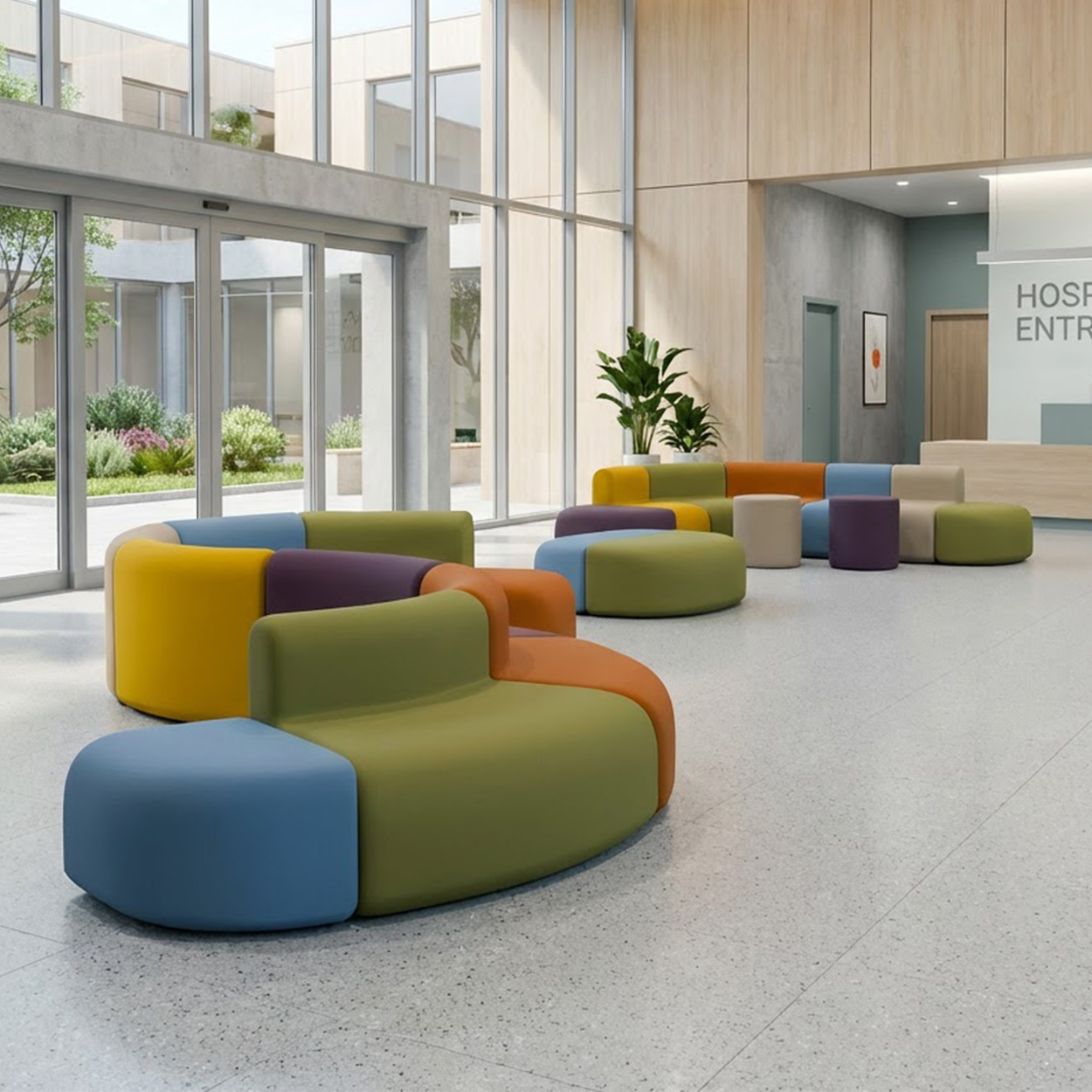
Movement is important. Young people need to be able to shift, fidget, curl up, stretch out. Furniture that accommodates a range of postures and positions, rather than enforcing a single “correct” way to sit, supports self-regulation. Modular furniture that can be reconfigured is particularly valuable here, because it allows the space to adapt to different activities and different needs across the course of a day.
Privacy matters to adolescents in a way it may not to younger children. The ability to create a sense of personal space, even within a shared environment, supports dignity and reduces confrontation. Furniture that can define zones without creating barriers or blind spots for staff is part of that.
And of course, the ligature risk profile in adolescent populations is a serious clinical consideration. Anti-ligature design in a child and adolescent context isn’t just about meeting compliance requirements. It’s about creating an environment where staff can focus on care rather than risk management, and where young people can be present in the space without constant supervision being the only safeguard.
Here’s what’s easy to miss: anti-ligature design and sensory-informed design are not competing priorities. The features that make furniture genuinely safe, no metal components, no exposed fixings, no hard edges, are the same features that make it sensory-friendly.
Solid foam construction eliminates ligature points and eliminates hard surfaces in the same move. Rounded profiles remove both injury risk and the visual and tactile aggression of sharp edges. Our modular configuration is designed to sit alongside each other and can be reconfigured without fixed connections.
When furniture is designed from the ground up for high-risk mental health and justice environments, with both safety and sensory experience as genuine design briefs, the result is a space that does more than simply not harm people. It actively supports recovery.
The shift in thinking that sensory-informed design represents is ultimately a shift from “how do we manage this population” to “how do we support this person.” That’s a significant change, and it shows up in the furniture.
A young person sitting in a well-designed therapeutic space, on furniture that feels safe and warm, in a room that doesn’t feel like a cell, is more likely to engage with the support being offered. They’re more likely to feel like a person in a place of care, rather than a risk to be managed in a place of containment.
That matters clinically. It matters ethically. And it matters for the staff who work in these environments every day, because a calmer, more regulated environment is a safer one for everyone.
At Abecca, we’ve spent decades designing furniture specifically for mental health, corrections, and youth justice environments. Every piece we make is built from solid foam with no metal or wooden components, fully anti-ligature, and designed to feel as good as it performs.
Our Armadillo Collection is designed with exactly these principles in mind: soft, sensory-friendly surfaces, tamper-proof with no exposed hardware, and the flexibility to configure spaces that work for the people using them.
https://abeccadesign.com/product-category/safe-furniture/armadillo-range/
If you’re designing or specifying a child and adolescent unit, a mental health facility, or a youth justice environment, we’d love to talk about what’s possible.
🇳🇿 abeccadesign.com
🇦🇺 abeccadesign.com.au
Share this Article